
What Your Website is Really Saying About You (Even if You Don’t Realize It)
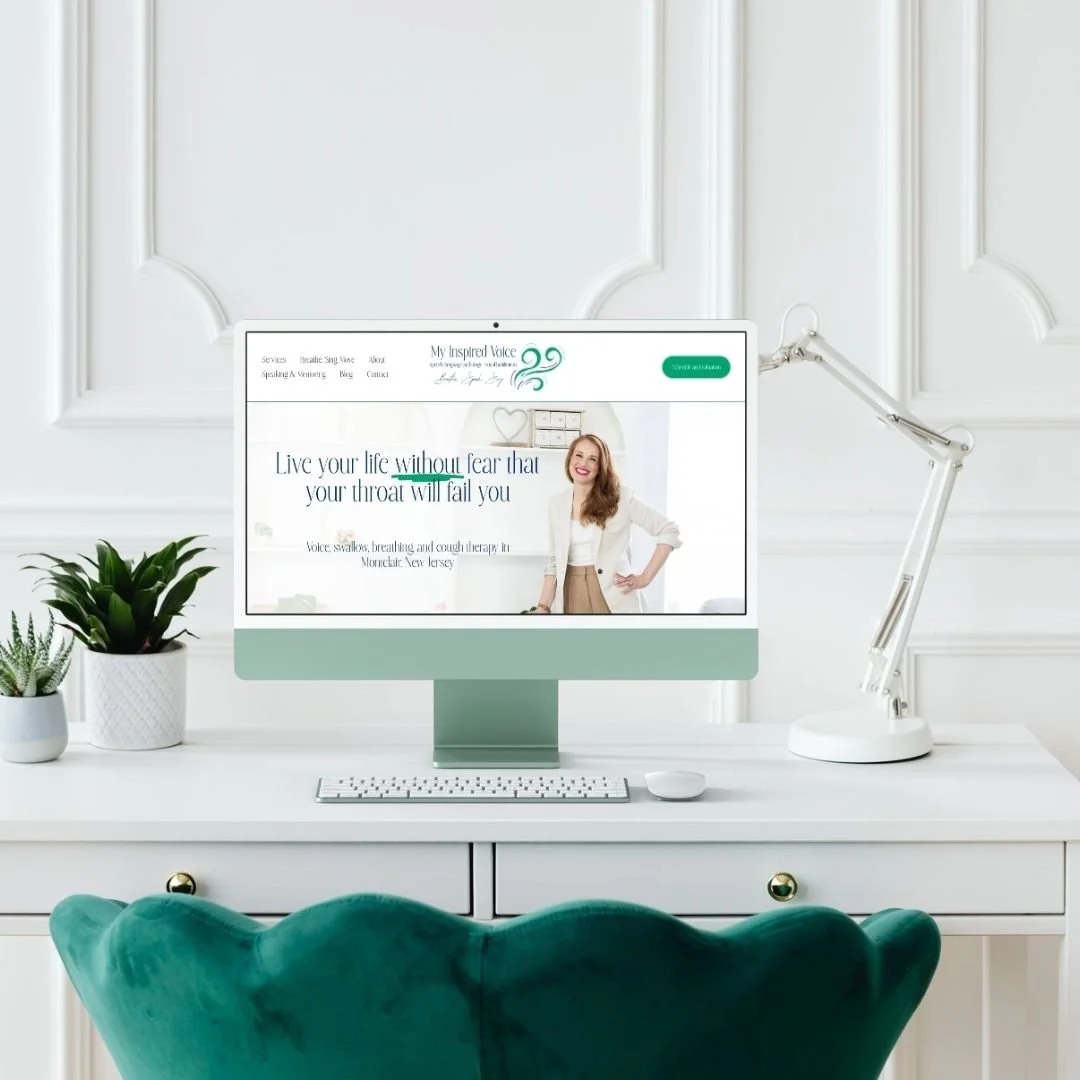
This piece was originally published in the Nov/Dec 2025 Issue of On Purpose Woman Magazine.
Have you ever walked into a boutique and felt immediately enchanted?
Maybe it was the scent of a signature candle wafting through the air, the soft hum of music, or shelves of beautifully curated treasures that seemed to invite you to linger. Every corner offered something to discover — a linen towel you suddenly knew your best friend needed, a cookbook you could already see open on your counter, a jar of dark chocolate fig spread just waiting to be paired with a cozy afternoon at home.
It’s the kind of place where you exhaled without realizing it, where you felt both at home and inspired, delighted to peruse a little longer.
And then there are the other spaces — the ones that make you want to turn around the moment you walk in. Cluttered shelves, harsh lighting, too much (or too little) to look at…
You can’t necessarily articulate why, but your body knows: this isn’t for me.
Your website is no different.
As your virtual storefront, your online home, it carries an atmosphere of its own. Visitors feel it the moment they arrive, often before they’ve read a single word. It’s a subtle but powerful transmission of who you are and how you make people feel.
So, what is your website saying about you?
After almost two decades of design and entrepreneurship experience, I’ve noticed four key messages your website sends — whether you intend them or not.
1. The Energy
Your website has an energy. It’s the unspoken language that reaches people before anything else, evoked through color, rhythm, imagery, spacing, tone, and even the way words flow across the page.
This is what people feel before they ever consciously think.
Are your visuals and language congruent? Do they express the emotional quality of your work: the softness, clarity, depth, or expansiveness that people experience when they’re with you? Or do they clash in tone or intent?
For example, imagine you’re a voice teacher ready to grow a thriving studio, but your website is filled with performance photos and long lists of your stage credentials. The message people receive is that you’re the star — not that they could be.
Or perhaps you’re a therapist or coach who helps people find calm and wholeness, yet your website uses bright, angular shapes and punchy neon colors. The dissonance between message and feeling may leave visitors confused without knowing why.
There’s room for creative tension and contrast of course, sometimes intentional incongruence adds intrigue. But intentionality is the key. The energy your site carries should feel aligned with how you want people to feel in your presence and in your work.
2. The People
Your website also communicates how you see your people and what you believe they are capable of.
Are you speaking to them or about them? Is your language filled with empathy, respect, and partnership, or is it unconsciously positioning you as the rescuer?
Do your words focus on their pain points, poking at the discomfort, or do they illuminate what’s possible for them beyond the pain?
People can feel whether you believe in their wholeness or see them as broken and needing to be fixed. They can sense whether you view them as co-creators in the process or as problems to solve. The way you describe your clients is the way they will experience themselves in your world.
When your site and the energy of your words reflects deep belief in your clients’ capability and readiness, when it honors where they are while inviting them toward what’s possible, that resonance builds instant trust.
3. The Authority
Your website also reveals what you believe about yourself — your confidence, groundedness, boundaries, and your willingness to take up space.
I like to think about therapist Terry Real’s grid model of “relational health.” He describes four patterns of relational dynamics we may fall into as it pertains to self-esteem and boundaries: being one-up or one-down, boundaryless or walled-off. In the center is relational health: confident, connected, and clear.
Your website lives somewhere on that grid, too.
Are you overemphasizing authority, leading only with credentials and expertise while keeping personality or warmth at arm’s length? Or are you underplaying your value, inviting people to “maybe reach out if it feels right,” instead of clearly articulating the transformation you offer?
The healthiest sites, like the healthiest relationships, embody both strength and humility. They stand rooted in truth and experience, yet remain approachable and human.
That balance builds trust and safety. Visitors feel it, even if they can’t name it.
4. The Organization
Finally, your website’s structure communicates safety and care.
Even the way your pages are organized — how information flows, how easily someone can find what they need — carries an energetic message.
Clarity feels like trust. Simplicity feels intentional.
When a site feels scattered or overwhelming, it can subtly signal chaos or uncertainty, even if your actual work is masterful. But when it’s thoughtfully structured and easy to navigate, visitors can relax into the experience. They know where they are and how to move forward.
Just as children feel safest when boundaries are clear, your potential clients feel most at ease when your website offers gentle guidance and coherence. That sense of order tells them: you will hold them with care.
The Deeper Invitation
Bringing these elements into awareness isn’t about manipulating perception, it’s about integrity. It’s making sure that what people feel when they encounter you online is congruent with who you truly are and the essence of your work.
When your site’s energy, language, authority, and structure come into alignment, your right people will recognize you immediately, in the same way you know when you’ve stepped into a space that feels like home.
Because your website isn’t just a marketing tool. It’s a sacred space that speaks the unspoken truth of your brand.
If your current website doesn’t fully reflect the depth or energy of who you are now, take heart. Awareness is the first step. When you start to notice where things feel off, you open the door to alignment — and your next evolution can begin to take shape.